
If you often twist your ankle 'out of nowhere' while walking or experience pain and swelling after long walks, you likely suffer from ankle instability.
In this blog, we explain everything you need to know about this condition that, although very common, should not go unnoticed.
How does your ankle work?
The ankle joint is a complex structure that allows the foot to move mainly in two directions:
Dorsiflexion: When the toes of the foot approach the shin.
Plantar flexion: When the foot points downward.
When instability exists, the joint loses its center and begins to perform abnormal movements that damage internal structures.
What is ankle instability?
Let's imagine that the foot and ankle are a bridge. Instability occurs when the ligaments, the bridge's cables that hold the bones together, stretch, weaken, or break, causing this bridge to become unbalanced and constantly wobble, since without this support, the joint cannot stay aligned.
Patients often describe that the ankle 'dances' or subtly moves from side to side, like a suspension bridge without proper tensioners. This not only creates insecurity when walking but also chronic pain and persistent swelling.
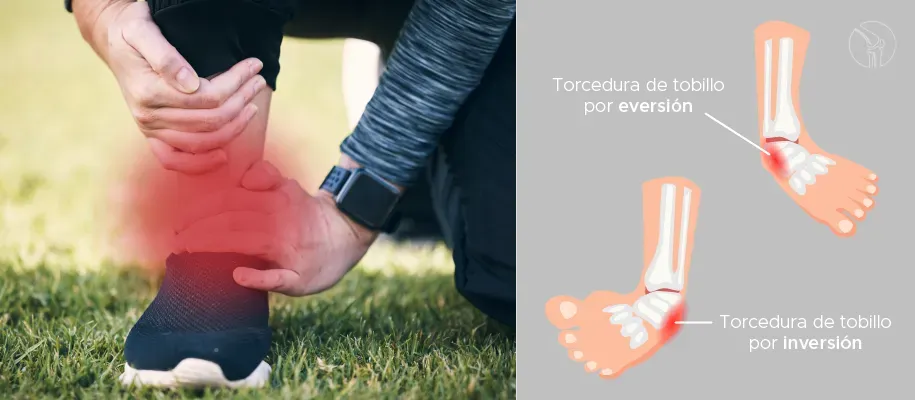
Main causes of ankle instability
There are different factors that can compromise the firmness of your step:
Mechanical instability: Caused by excessive ligament flexibility that prevents them from having a firm 'grip,' the range of motion is greater than normal, facilitating sprains.
Functional Instability: Due to a deficit in proprioception, which is the ability of our nervous system to locate and react to a space or action. If this communication fails, the body does not react in time to avoid a sprain.
Muscle weakness: The peroneal tendons (on the lateral part of the ankle) are the active protectors; if they are weak, the ankle remains unprotected.
Foot alterations: Flat feet or excessive arch (cavus foot) cause weight to be distributed poorly, overloading the lateral area of the foot.
External factors: Sports, practicing outdoor sports such as hiking, impact sports like basketball, tennis.
Overweight: Excess load on the joints.
Footwear: The use of footwear without support or with elevation such as heels or none can affect the foot and ankle.
Differences between Acute and Chronic ankle instability
Acute ankle instability
Appears immediately after a recent injury. It is characterized by intense pain, inflammation, and difficulty supporting the foot. It is the direct response to tissue damage.
Chronic ankle instability
When the ankle does not fully recover after several repeated injuries or sprains. The ankle no longer swells as much as the first time, but feels 'loose'. Over time, this lack of stability causes premature cartilage wear, drastically increasing the risk of developing ankle arthritis.
Key fact: Up to 70% of people who suffer a sprain can develop chronic instability if they do not receive adequate rehabilitation. According to the Journal of Athletic Training, 40% of patients present symptoms of instability even one year after their first injury.
How to know if you suffer from ankle instability? Symptoms
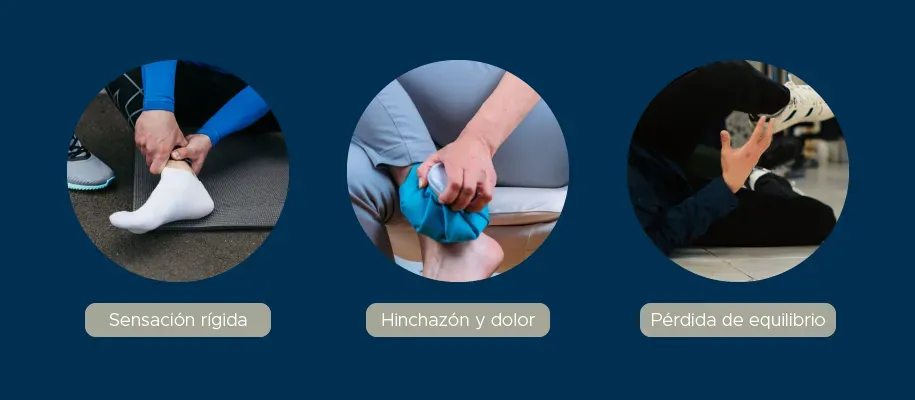
Reduced range of motion: Due to ligament damage and inflammation, the ankle may feel stiff or have a reduced range of motion. This can limit activities that require flexibility, such as squatting or going up and down stairs.
Swelling and pain: Swelling in the ankle area may reappear, especially after physical activity.
Loss of balance: A sensation of wobbling, as if the ankles couldn't support themselves or were weak. This can make balancing difficult, especially on one foot.
How to treat ankle instability
1-Conservative treatment:
It is not necessary to have a serious injury to seek treatment. The goal is to reduce pain and prevent wear from progressing towards surgery. During the orthopedic evaluation, the following may be recommended:
Initial protocol: Rest, ice, compression, and elevation (RICE method) after a sprain.
External supports: Temporary use of ankle braces, orthopedic boots, or custom insoles to correct gait (supination).
2-Physiotherapy: The key to recovery
Rehabilitation is essential. It is not enough for it to 'stop hurting'; it is necessary to train proprioception and muscle strength. A program of balance and resistance exercises is the only thing that can restore the ankle's ability to react to unforeseen events.
Surgery for ankle instability
Some people may need surgical repair if the ligaments are severely damaged or if their symptoms do not respond to conservative treatments. Ligament reconstruction surgery allows for the restoration of ankle stability.
Prevention tips (Quick tips):
Perform balance exercises in your daily routine.
Choose footwear with a good heel counter (the back part of the shoe that holds the heel).
Do not ignore a 'mild' sprain, always seek evaluation.
If you frequently twist your ankle or feel that your ankles swell or hurt more, don't allow it to become the norm.
Ignoring ankle instability is giving permission for wear and tear on your joints. What seems like a 'simple stumble or twist out of nowhere' can turn into premature arthritis.
I invite you to an orthopedic evaluation. I am located in Tijuana Baja California, close to you in Zona Rio in Torre Norte 2.
No hay comentarios para este blog.