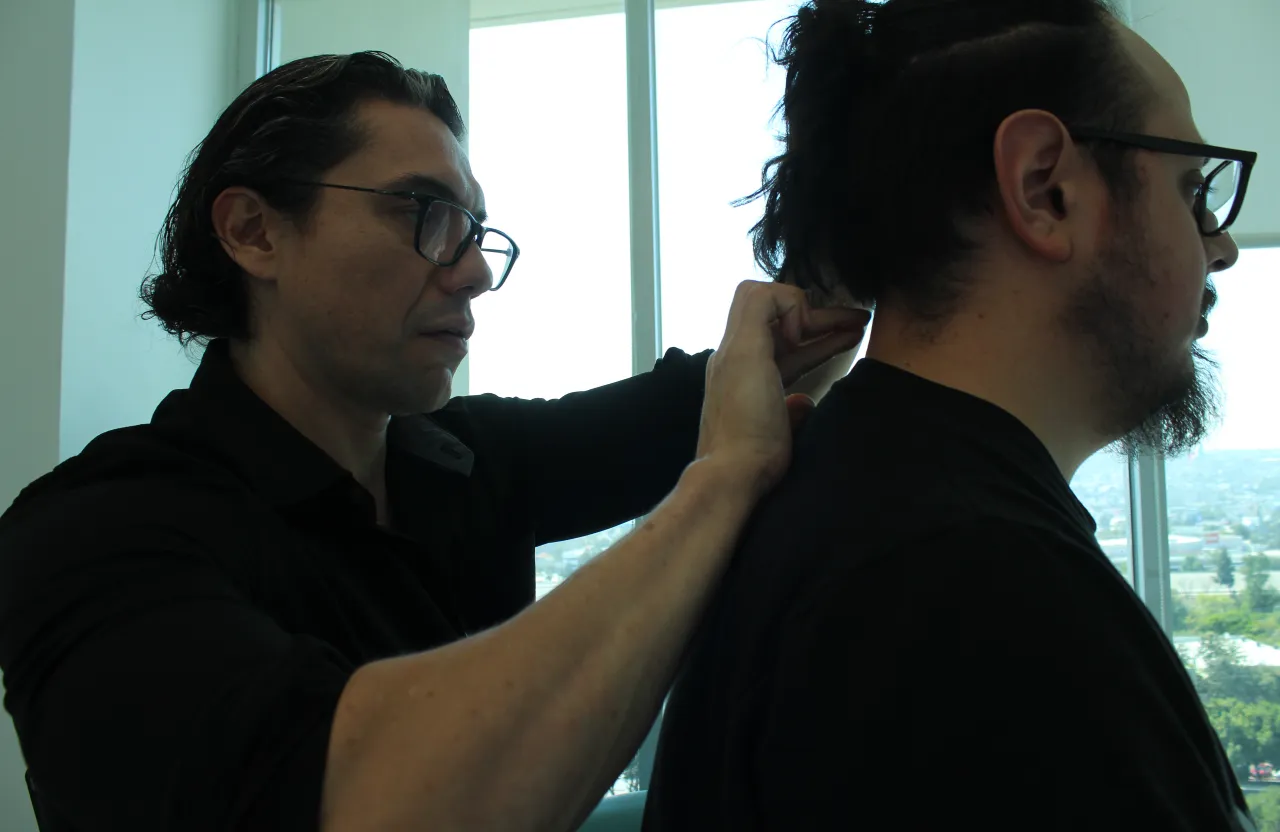
Cervical spondylosis or cervical osteoarthritis is a degenerative condition that affects the entire joint and surrounding tissues, causing pain, swelling, and stiffness.
Why does cervical osteoarthritis occur?
Throughout life, repetitive microtraumas occur that cause the cartilage covering the joints and the disc between the vertebrae to decrease in thickness and lose their function of cushioning movement and absorbing impact on this region.
With the deterioration of cartilage, its elasticity is lost, becoming thin, weak, and brittle, causing the pads that are part of the cervical spine to also compress and wear out, creating friction between the vertebrae. This generates muscle spasms as a defense mechanism.
In the early stages, pain usually appears with movement and improves with rest, but as it progresses, the pain persists even at rest.
What happens inside the cervical spine and why is it so important?
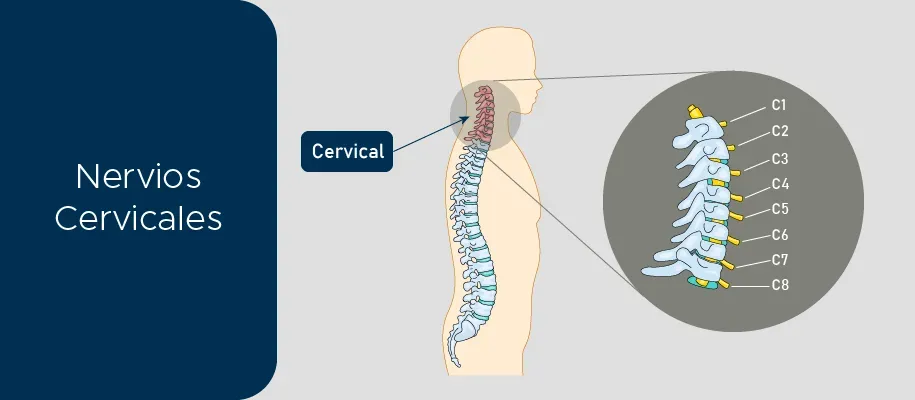
They are composed of very important spinal nerves that exit through small openings between each vertebra. These nerves stimulate muscle movement in the neck, shoulder, arm, and hand, as well as provide sensation.
Cervical nerves C1, C2, and C3 control head and neck movements forward, backward, and sideways. The C2 nerve provides sensation to the upper part of the head; C3, to the sides of the face and the back of the head.
- Cervical nerve 4: Controls movement and sensation in parts of the neck, shoulders, and upper arms. It is also one of the nerves that controls the diaphragm.
- Cervical nerve 5: Controls the deltoid muscles of the shoulders and the biceps. It provides sensation to the upper arm down to the elbow.
- Cervical nerve 6: Controls the wrist extensor muscles and participates in biceps control. It provides sensation to the thumb side of the forearm and hand.
- Cervical nerve 7: Controls the triceps muscles and wrist extensors. It provides sensation to the back of the arm, down to the middle finger.
- Cervical nerve 8: Controls your hands and provides sensation to the pinky side of your hand and forearm.
Cervical Osteoarthritis Symptoms
Pain and stiffness in the neck and shoulders: This pain and its intensity can be variable or very severe, worsening at night while sleeping due to increased pressure.
Cervical vertigo: Causes dizziness and a feeling of instability. This occurs due to compression of certain nervous and vascular structures in the cervical area.
Cracking sounds: These sounds generally occur during wide movements of the cervical spine.
Mechanical blockage: Caused by osteophytes, loose bodies, or contractures, it can produce a lack of neck mobility.
Typically, morning stiffness in osteoarthritis lasts about 30 minutes and improves with movement during the day.
Cervical Spondylosis and Osteophytes or 'Parrot Beaks'
When there is wear and tear, the body seeks to protect itself from that imbalance and friction between the cervical vertebrae. To do this, it tries to fuse the worn cervical vertebrae and these bony protuberances (osteophytes) are generated, which can cause mechanical blockages or contractures.
Risk Factors: Who is More Prone?
While age is a main factor, cervical spondylosis doesn't only occur in older adults. The truth is that currently more cases are appearing at earlier ages, from 40–50 years old, with women being especially affected due to decreased estrogen during menopause. Other risk factors include:
- Previous neck trauma (whiplash).
- Obesity and sedentary lifestyle.
- Jobs or activities that require maintaining forced neck postures (for example, office work, painters, etc.).
- High-impact sports or high-risk activities for the spine.
- Genetic factors.
- Pathologies such as diabetes, rheumatoid arthritis, or joint infections.
Diagnosis of Cervical Osteoarthritis
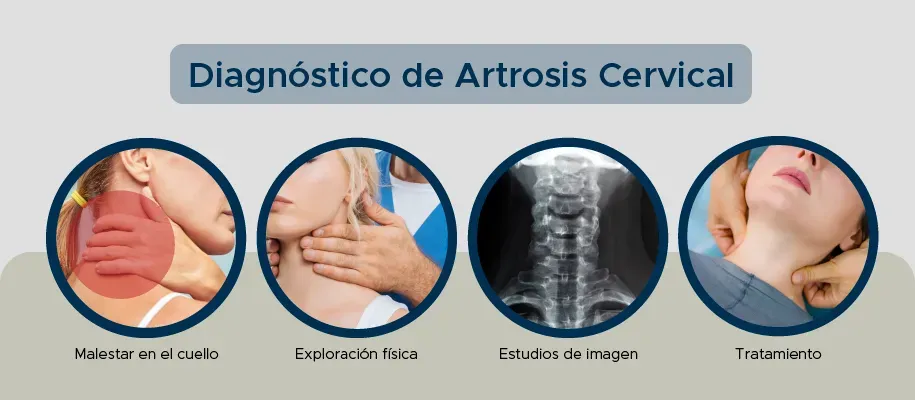
Diagnosis is based on:
Physical examination: Where mobility, muscle strength, and reflexes are evaluated.
Imaging studies: Studies such as X-rays, MRIs, and CT scans allow confirmation of the diagnosis, evaluation of stenosis (number of compression levels, importance and location of stenosis, and associated instability).
Conservative Treatment for Neck Osteoarthritis
It depends on the degree of affectation. Almost always, or in most cases, it is approached with multidisciplinary conservative treatment aimed at reducing pain and recovering functionality.
This plan may include:
- Physical therapy and specific strengthening exercises.
- Anti-inflammatory and analgesic medications.
- Pain management therapies, such as injections.
- Relative rest and temporary use of splints or soft collars.
- Activity modification and postural correction.
The approach is always multidisciplinary management, prioritizing conservative options before considering surgery.
Exercises and Activities Not Recommended if You Have Cervical Osteoarthritis
When suffering from cervical osteoarthritis, it is important to avoid certain movements and efforts that may aggravate symptoms or accelerate joint wear.
- High-impact sports: Running, basketball, or any sport that involves impact or collision of the head and neck.
- Prolonged static postures: Avoid maintaining postures that produce tension in the neck, for example, spending a lot of time on the cell phone, computer, sitting, or with the head tilted.
- Certain gym exercises: It is recommended to avoid exercises such as military press, behind-the-neck pulldowns, or carrying heavy objects, especially if they involve carrying weight above the shoulders.
- Avoid sudden movements of the cervical spine, such as swimming breaststroke.
Surgery for Cervical Osteoarthritis
In case there is no improvement with conservative treatment or if the condition is in a situation that compromises nerve integrity (such as progressive muscle weakness or loss of sphincter control), surgery will need to be considered.
There are different types of surgery:
Laminectomy: Consists of removing the vertebral arch (also known as lamina) that covers the spinal canal. This surgery enlarges the spinal canal to relieve pressure on the spinal cord or nerves, pressure that is caused by bony growths such as osteophytes.
Cervical fusion: Consists of joining two vertebrae together so they don't move. For this, in addition to using a fixation system (such as plates and screws), the bone is stimulated to grow from one vertebra to another as if making a weld.
Cervical disc prosthesis: It is a mobile implant placed through an anterior approach that replaces the damaged disc. It maintains some movement and can reduce overload on adjacent discs.
A diagnosis of cervical spondylosis is not the end of an active life, much less at a young age. With proper and personalized management, the vast majority of patients achieve excellent control of their symptoms and maintain their quality of life. The key lies in an accurate diagnosis and a treatment plan adapted to each individual.
If you or any friend or family member experience these symptoms, share this blog with them.
If you live in Tijuana, its surroundings, or San Diego, don't hesitate to schedule an appointment with me for a complete evaluation consultation and a personalized treatment plan.
No hay comentarios para este blog.